
THE CLIENT FILES Episode 1: The Ghost

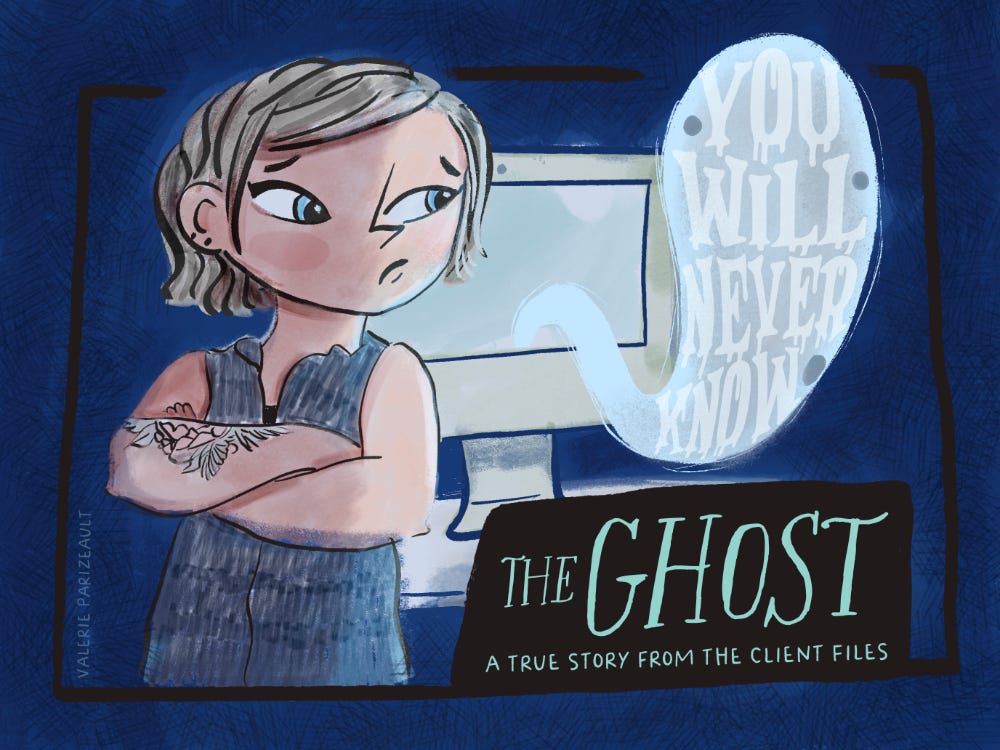
THE CASE
The roughs were delivered. The next steps explained. A Zoom call was offered.
And then… Crickets. Fifteen freakin’ days of them.
No “got it, looks great.” Or “can we talk about the sketch?” No “sorry, been slammed.” Just... nothing. The kind of nothing that has a weight to it.
My first email was friendly. Second email was still friendly, but firmer. In email #3, I told her the project was officially on pause and that the timeline would need to be revised when she resurfaced.
Then I put my phone face down and went back to work.
THE SUSPECT
Here’s what my brain wanted to do in those fifteen days: make it about me.
And Stacie — my inner critic, she has a name, we’ve been through a lot together — was more than happy to help.
She hated the sketches. She found someone better. She changed her mind and doesn’t know how to tell me. Maybe your rates scared her off after all. Maybe you’re just not that good.
Stacie loves a silence; she fills it right up.
Here’s the thing though: silence is not reliable data.
You don’t actually know why someone goes quiet. They could be on vacation. Dealing with a family emergency. Buried under a deadline of their own. Or yes, sometimes they are just terrible at email. Treating your own anxiety as information is a trap that will have you rewriting perfectly good work, dropping your rates, and apologizing for things that weren’t your fault.
Stacie would like you to do all of those things. Don’t listen to Stacie.
THE EVIDENCE
The moment I knew something was off wasn’t day one of the silence. It was day three, when I caught myself about to open my draft and soften it. Make it smaller. Add a “no worries if you’re busy!” at the end.
I closed it and didn’t send it.
That impulse, to shrink, to apologize preemptively, to make the discomfort stop by making yourself smaller — that’s the real thing to watch for. Not the silence. The flinch.
THE PROTOCOL
When a client goes quiet after a deliverable, here’s what I do:
1. Don’t panic. Life happens. People go on vacation, deal with emergencies, and yes, sometimes they are just terrible at email. This is not about you.
2. Follow up twice. Short. Friendly. No guilt-tripping, no over-explaining. You are not chasing — you are managing a project.
3. On the third contact, put the project on pause. Let them know the timeline will need to be revised when they’re back. This isn’t a threat — it’s just true, and saying it out loud protects you and your schedule.
4. If they owe you money, invoice them. Your contract should already cover work completed. You might not get paid, but you’ll at least have documentation for tax time.
5. Move on. Not forever, necessarily. But mentally? Yes. Your attention is a resource. Stop spending it on someone who isn’t spending any on you.
CASE STATUS
She got back to me after email #3. Project is still a go!
Stacie had no comment.
The Client Files is an occasional series about the situations nobody prepares you for — and the protocols I’ve built to handle them without losing my mind (or my clients). Also, I needed an excuse to add to my tween/middle grade portfolio.
You are making the most of an inconvenient situation. Best way to approach it. Glad to hear it is still a go. Best of all ways and another sign that persistence pays off.